Key Takeaways
- Ice dams start with heat leaking into the attic, so insulation and air sealing are the real fix.
- A roof rake and clear gutters help in the short term.
- Pipes freeze most often in exterior walls, crawl spaces and garages.
- Know where your main water shut-off is before winter starts.
Updated: November 2026.
Ontario winters are hard on houses. Two of the most common and costly problems are ice dams along the roof edge and pipes that freeze and burst. Both often show up in the same homes, and both usually come down to heat going where it should not.
Here is how to prevent each problem, and what to do if one happens anyway.
What Causes Ice Dams?
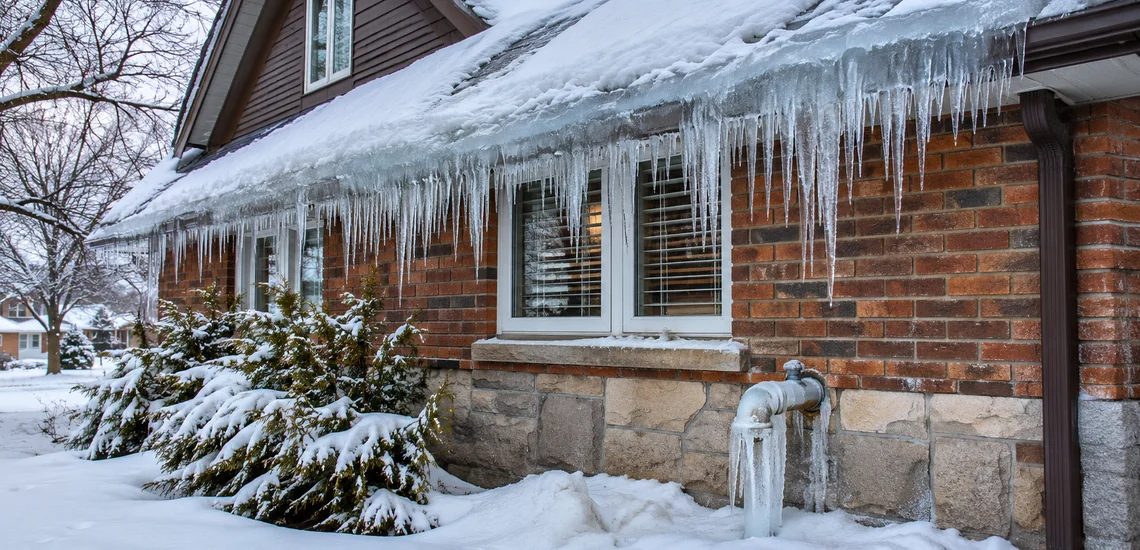
Ice dams form when warm air from the house heats the roof deck. Snow melts higher up the roof, runs down to the colder eaves and refreezes. Over time, a ridge of ice builds up and traps water behind it, which can push under shingles and leak into ceilings and walls.
Common warning signs:
- Large icicles along the gutters
- Bare patches of roof while the rest stays snow-covered
- Water stains on upstairs ceilings or exterior walls
How Do You Prevent Ice Dams for Good?
Keep the roof deck cold. That means stopping heat from reaching the attic and letting any warm air that does get in escape through ventilation.
- Air seal the attic floor around light fixtures, plumbing stacks, the attic hatch and wall top plates.
- Add insulation to bring the attic up to about R-50.
- Check ventilation so soffit vents are clear and roof vents are working.
- Seal or insulate ducts and bathroom fans running through the attic.
Ontario’s attic insulation rebate is still open until March 31, 2027. Our guide to the attic insulation rebate explains how much you can get.
What Can You Do About Ice Dams Right Now?
Short-term steps can limit damage until you fix the attic. Never climb onto an icy roof or chip at ice with tools, since it damages shingles and is dangerous.
- Use a roof rake from the ground to clear the bottom few feet of snow after storms
- Keep gutters and downspouts clear before the first heavy snow
- Call a pro for steaming if water is already coming inside
- Consider heat cables on problem eaves, installed with a proper outdoor-rated circuit
Why Do Pipes Freeze in Ontario Homes?
Pipes freeze when they run through spaces that drop below 0°C, such as exterior walls, crawl spaces, garages and unheated basements. Cold drafts make it worse. Frozen water expands, pressure builds, and the pipe can split, often at a spot away from the ice itself.
The risk is highest during long cold snaps, when you are away from home or when the heat is turned down too low.
How Do You Prevent Frozen Pipes?
Most frozen pipes are preventable with a few fall tasks and some cold-weather habits.
- Shut off and drain outdoor taps, or install frost-free hose bibs.
- Insulate exposed pipes in crawl spaces, garages and basements.
- Seal air leaks near pipes, such as rim joists and service entries.
- Keep the heat at 15°C or higher when you are away.
- Open cabinet doors under sinks on exterior walls during cold snaps.
- Let a tap drip on lines that have frozen before.
What Should You Do If a Pipe Freezes?
Act fast but carefully. Turn off the main water supply if you suspect a split, then open the affected tap to relieve pressure. Warm the pipe gently with a hair dryer or space heater, starting closest to the tap. Never use an open flame.
If a pipe has burst, shut off the water and call a licensed plumber. Then contact your insurer. Water damage claims are much easier when you act quickly and keep records. For upgrades that protect your home long-term, see renovation tips that pay off.
Frequently Asked Questions
What causes ice dams on Ontario roofs?
Ice dams form when heat escaping from the house warms the roof, melting snow that then refreezes at the colder eaves. The ridge of ice traps more meltwater behind it, which can back up under shingles and leak into ceilings and walls.
At what temperature do pipes freeze in Ontario?
Pipes are at risk once outdoor temperatures drop well below freezing, especially around -7°C and colder, and when they run through unheated spaces or exterior walls. Wind, poor insulation and air leaks raise the risk even at milder temperatures.
Should I leave a tap dripping during a cold snap?
Yes, for pipes that have frozen before or run along exterior walls. A slow drip keeps water moving and relieves pressure in the line, which lowers the chance of a burst. Opening cabinet doors under sinks also helps warm air reach the pipes.
Is it safe to chip ice dams off the roof?
No. Chipping or using an axe can damage shingles and is dangerous on a slippery roof. Use a roof rake from the ground to remove snow near the edge, and call a professional for steaming if water is already leaking inside.
The Bottom Line
Ice dams and frozen pipes are two sides of the same winter problem: heat and cold in the wrong places. Seal and insulate the attic, protect vulnerable pipes, and keep your home warm and dry through the season.
Need help with insulation, air sealing or plumbing upgrades? Renovation Advisor connects Ontario homeowners with vetted contractors who can winter-proof your home.