Key Takeaways
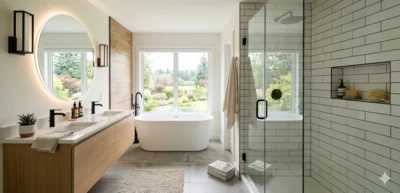
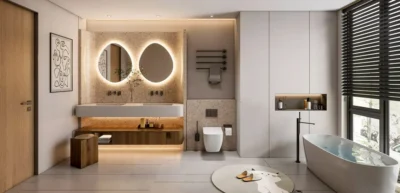
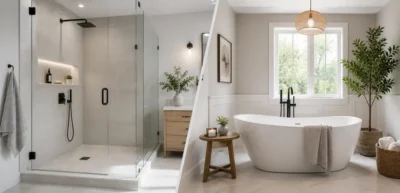
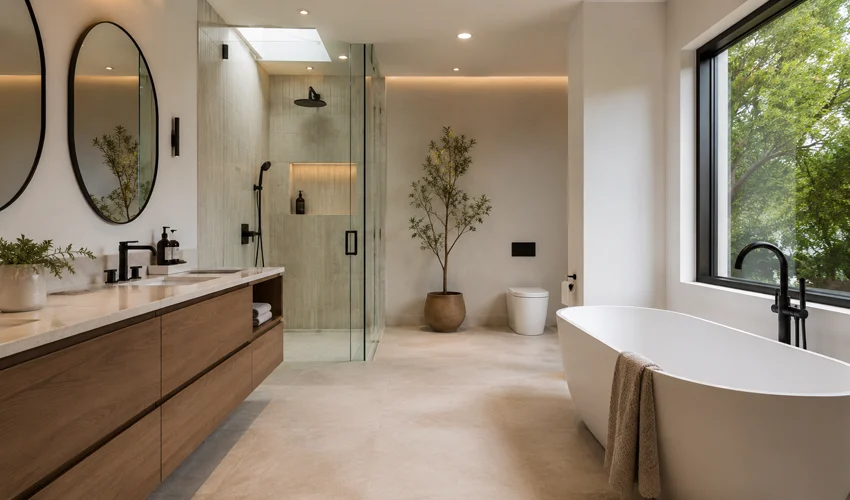
- Bathrooms in 2026 are shifting from purely functional spaces to personal wellness retreats.
- Walk-in showers, wet rooms, and layered lighting remain the most requested upgrades.
- Warm, earthy palettes are replacing the all-white, all-grey look of past years.
- Statement tile, textured surfaces, and large-format flooring are leading material choices.
- Smart storage and water-efficient fixtures are becoming standard expectations, not extras.
If you’re planning a bathroom refresh in the Greater Toronto Area this year, here’s what’s actually shaping the spaces homeowners are building right now.
Bathrooms Are Becoming Wellness Retreats
The biggest shift in bathroom design this year is the move away from “just a bathroom” toward a space built for rest and recovery. Homeowners are designing around real daily routines, not just appearances.
This wellness focus shows up in a few consistent ways:
- Larger walk-in showers with multiple water outlets
- Soaking tubs positioned as a focal point rather than an afterthought
- Layered lighting that shifts from bright task lighting to softer ambient settings
- Heated flooring, which continues to be one of the most requested comfort upgrades
These features aren’t just trend-driven extras. They reflect a broader pattern of homeowners treating the bathroom as a space worth investing time and thought into, the same way they would a kitchen or living room.
Walk-In Showers and Wet Rooms Keep Winning
Open, curbless showers continue to dominate renovation requests across the GTA, and for good reason. They make smaller bathrooms feel more spacious, they’re easier to clean and maintain, and they tend to age better with a household than a traditional tub-shower combo.
That said, the decision between a shower and a tub isn’t one-size-fits-all, especially in family homes where resale value matters. We covered this in detail in our breakdown of walk-in showers versus tubs and their impact on resale value in GTA homes, which is worth a read before you commit to ripping out your only tub.
Warmer Palettes Are Replacing All-White Bathrooms
For years, bright white and cool grey bathrooms were the safe, default choice. That’s changing in 2026. Designers are leaning into warmer, nature-inspired tones that feel more grounded and less clinical.
Expect to see more of the following:
- Earthy browns, warm taupes, and soft terracotta accents
- Deeper jewel tones like emerald or charcoal used as statement colors
- Natural materials such as white oak vanities and stone-look porcelain
- Textured finishes that add depth without overwhelming a small space
The goal isn’t to chase a single trendy colour. It’s to create a palette that feels calm and intentional, and that still holds up well years from now.
Statement Tile and Texture Take the Spotlight
Tile choices in 2026 are doing more visual work than ever. Homeowners are moving past basic subway tile and reaching for shapes and layouts that add character to the room.
A few patterns showing up repeatedly in renovation plans:
- Stacked or vertically laid shower wall tile
- Hexagonal and large-format flooring tile
- Slim or minimal grout lines for a cleaner, more seamless look
- Mixed textures, pairing matte tile with polished stone or brushed metal fixtures
Texture has become just as important as colour. A flat, single-finish bathroom tends to feel dated faster than one with a mix of matte, glossy, and natural materials working together.
Smart Storage Is No Longer Optional
As bathrooms take on more functions, from skincare routines to grooming stations, storage has become a core design requirement rather than an afterthought. Cluttered counters are one of the fastest ways to make a beautifully renovated bathroom feel unfinished.
Popular storage-focused choices this year include:
- Deep vanity drawers designed around hair tools and skincare products
- Built-in outlets inside drawers to hide cords and chargers
- Soft-close drawers and doors as a baseline expectation, not an upgrade
- Recessed niches in showers for a cleaner, more streamlined look
Sustainability Is Now a Default, Not a Bonus
Sustainable choices have moved from a “nice to have” to a primary decision-making factor for many homeowners. This isn’t only about environmental impact; it also tends to align with lower long-term maintenance and better day-to-day performance.
Common sustainable upgrades include:
- Low-flow faucets and showerheads that don’t sacrifice water pressure
- LED lighting paired with dimmer controls
- VOC-free paints and finishes for better indoor air quality
- Durable materials like porcelain and white oak that don’t need frequent replacement
Planning Your Own 2026 Bathroom Renovation
Trends are useful for inspiration, but the right renovation plan still depends on your home’s layout, your household’s daily habits, and how long you plan to stay in the property. A trend that works beautifully in a downtown condo bathroom won’t always make sense in a family home in Newmarket or Aurora.
If you want a broader look at layout options and design approaches before settling on a direction, iRemodel’s bathroom renovation guide is a solid resource for comparing different styles side by side.
When you’re ready to move from inspiration to an actual plan, our bathroom renovation services page outlines how we approach these projects from design through completion. You can also get in touch with our team to talk through what would actually work for your space.
Final Thoughts
The bathrooms that hold up best aren’t the ones that chase every trend at once. They’re the ones built around a clear sense of how the space is actually used, then layered with the materials, storage, and finishes that support that daily routine. Use these 2026 trends as a starting point, not a checklist.