2026 Market Insights: Key Takeaways
Smart ROI: A mid-range bathroom renovation in Ontario currently yields a 60–75% return on investment, often increasing total home value by 3–5%.
Budgeting Realities: Expect to invest between $18,000 and $30,000 for a full mid-range 3-piece bathroom in the GTA and surrounding areas.
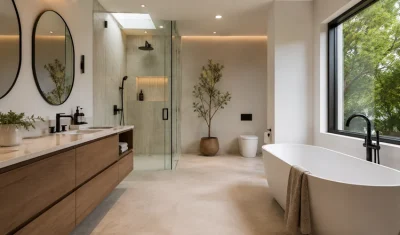
The “Quiet Luxury” Shift: 2026 trends have moved away from stark whites toward “mineral” tones like sand, clay, and terracotta.
Permit Necessity: In Ontario, “like-for-like” replacements usually don’t need a permit, but moving a toilet or shower drain by even a few inches requires municipal approval.
Efficiency Rebates: High-efficiency fixtures may qualify for Ontario-specific programs like the Energy Affordability Program, which offers free high-efficiency showerheads and aerators for eligible households.
A successful bathroom renovation in 2026 is no longer just about aesthetics; it is about merging high-performance technology with timeless “wellness” design. For Ontario homeowners, navigating rising material costs and strict building codes requires a strategic approach. At Renovation Advisor, we’ve analyzed the current market to help you plan a space that is as financially sound as it is beautiful.
1. Planning: The Ontario Cost & Permit Landscape
Before demolition begins, you must understand the local regulatory environment. In cities like Toronto, Mississauga, and Ottawa, building departments have digitized the permit process, but the rules remain strict.
When Do You Need a Permit?
-
No Permit Needed: Replacing a vanity, toilet, or tile in the exact same location (cosmetic).
-
Permit Required: Any “Wet Zone” migration. Moving a drain or supply line triggers the need for a plumbing permit (typically $150–$400).
-
ESA Notification: Any electrical change—such as adding heated floors or LED mirrors—requires a notification to the Electrical Safety Authority (ESA).
Budgeting for 2026
Labor now accounts for nearly 50–60% of your total budget. While a powder room might start at $8,000, a primary ensuite with custom glass and porcelain tile typically reaches the $35,000+ range. To understand how these costs fit into a larger home strategy, see our 2026 Kitchen Renovation Guide for a comparison of high-traffic area investments.
2. Design Trends: Beyond “Instagram Spas”
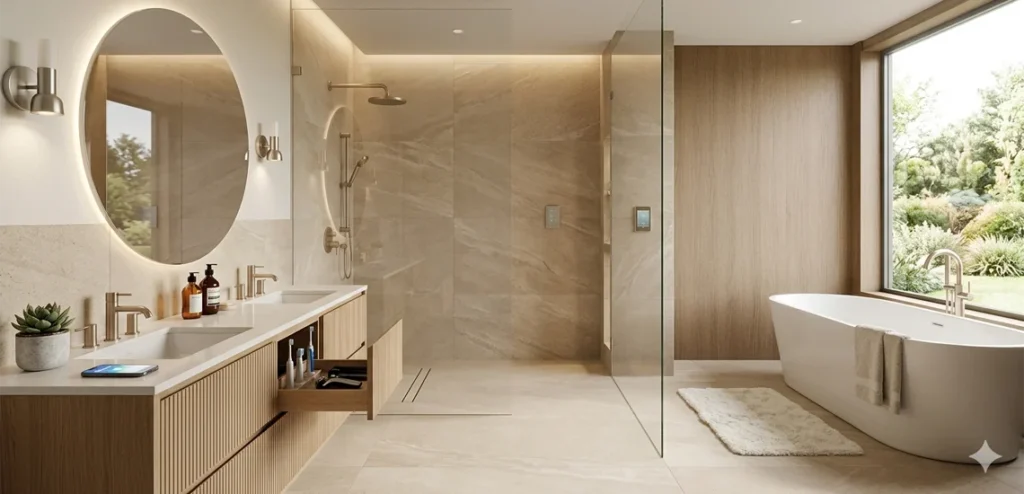
The 2026 aesthetic is focused on Tactile Luxury. Homeowners are trading high-maintenance materials like polished marble for high-definition porcelain that mimics natural stone without the porous downsides.
-
The Working Vanity: We are seeing a surge in “appliance garages” inside vanities—dedicated, powered drawers for electric toothbrushes and shavers to keep counters clear.
-
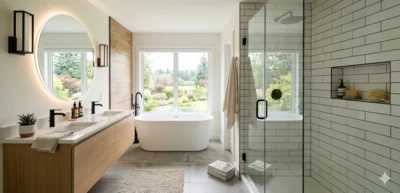
Warmth is the New White: Stark, clinical bathrooms are out. Warm neutrals and brushed brass or “champagne” finishes are the top choice for fixtures in 2026.
-
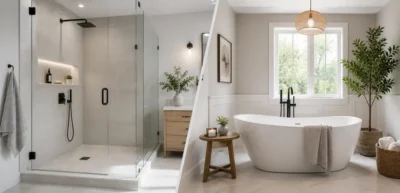
Universal Design: Curbless showers and reinforced walls (for future grab bars) are now standard “future-proofing” features that significantly boost resale value.
3. Smart Technology & Energy Efficiency
Smart bathrooms have moved from “gimmick” to “utility.” Integrated systems now focus on moisture control and water conservation.
-
Humidity-Sensing Ventilation: New 2026 systems auto-activate based on humidity levels, effectively preventing mold—a common issue in older Ontario homes.
-
Smart Monitors: Leak detection systems, like those from Moen or Phyn, can now notify your phone of microscopic pressure changes, potentially saving you thousands in water damage.
-
Heated Elements: Electric radiant floor heating beneath porcelain tile is no longer just a luxury; it’s a functional choice that helps dry the floor faster and reduce ambient moisture.
To see how these structural and technological upgrades can be applied to other areas of your home, browse our latest home renovation tips and news.
4. Materials: Durability Meets Style
Selecting the right materials is the difference between a 5-year bathroom and a 20-year bathroom. In the Canadian climate, moisture resistance is your primary goal.
-
Large Format Tiles: By using tiles as large as 24″x48″, you minimize grout lines, which are the primary failure point for mold and staining.
-
Quartz vs. Marble: For vanities, quartz remains the king of durability, offering a 30–50% cost savings over natural stone while being completely non-porous.
-
Waterproofing Systems: Ensure your contractor uses advanced membranes like Schluter-Kerdi for a 100% watertight seal behind the tile.
Whether you are looking for a simple refresh or a complete structural overhaul, our category of home improvement guides provides the technical depth needed to manage your project with confidence. For specific insights into luxury bathroom layouts, visit our dedicated bathroom section.