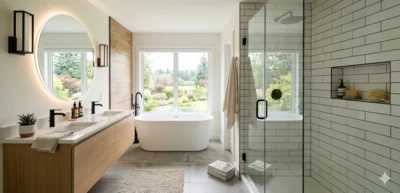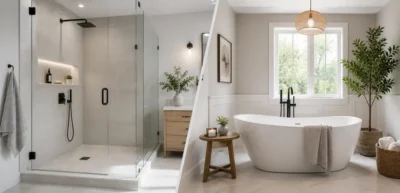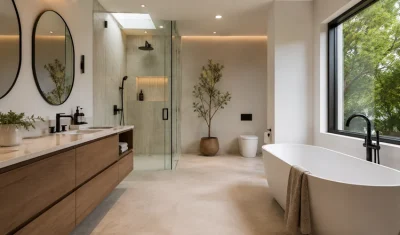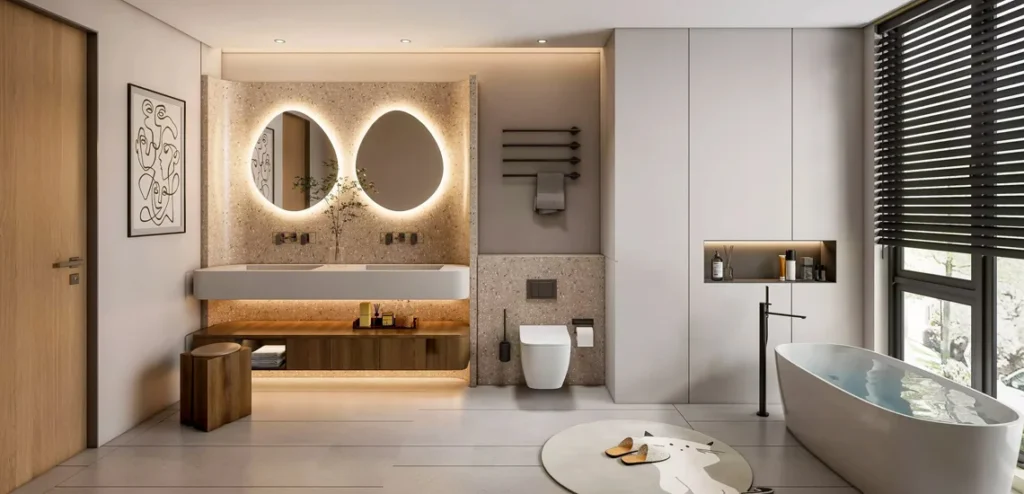
When designing an ensuite, the vanity you choose does far more than hold a sink—it defines how the space feels, functions, and flows. One of the most common design decisions homeowners face today is choosing between a floating vanity and a furniture-style (freestanding) vanity. Both options can elevate your bathroom, but each comes with distinct advantages depending on your layout, storage needs, and design goals.
If you’re planning a renovation with Renovation Advisor, understanding how each option performs in real-world layouts will help you make a confident, long-term decision.
What Is a Floating Vanity?
A floating vanity—also known as a wall-mounted vanity—is attached directly to the wall and does not touch the floor. This creates the illusion that the cabinet is “floating,” leaving open space underneath.
This style has become increasingly popular in modern and spa-inspired bathrooms thanks to its clean lines and minimal aesthetic. Floating vanities can be installed at various heights and are especially effective in smaller ensuites where maximizing visual space is a priority.
What Is a Furniture-Style Vanity?
A furniture-style vanity sits directly on the floor, often with legs or a solid base. It resembles a piece of furniture, offering a more traditional or transitional look.
These vanities typically provide more storage, a wider range of design styles, and easier installation compared to wall-mounted alternatives. They are a staple in classic, farmhouse, and transitional bathroom designs.
Visual Impact: Open vs Grounded Design
One of the biggest differences between floating and furniture-style vanities is how they affect the visual perception of your ensuite.
Floating vanities create a lighter, more open feel. Because the floor continues underneath, the room appears larger and less cluttered. This effect is particularly valuable in compact ensuites or narrow layouts where every visual inch counts.
Furniture-style vanities, on the other hand, provide a grounded and substantial look. They anchor the space visually and often become a focal point, especially when designed with rich wood tones, decorative legs, or detailed cabinetry.
If your goal is a sleek, modern spa vibe, floating is the clear winner. If you prefer warmth, character, and timeless appeal, furniture-style vanities are often the better fit.
Storage Considerations
Storage is one of the most practical—and often overlooked—factors when choosing a vanity.
Floating vanities typically offer less storage because they don’t extend to the floor. Their compact design limits cabinet depth and height, which can be a drawback in shared ensuites or households with lots of toiletries.
Furniture-style vanities excel in storage capacity. With full-height cabinetry and deeper drawers, they provide ample space for towels, cleaning supplies, and daily essentials.
If your ensuite relies heavily on vanity storage, a freestanding option will likely serve you better. However, if you can supplement with wall cabinets, recessed niches, or linen storage, a floating vanity can still work beautifully.
Cleaning and Maintenance
Cleaning might not be the most exciting consideration—but it can make a big difference in everyday use.
Floating vanities are easier to clean because there are no legs or baseboards obstructing access to the floor. Dust, hair, and moisture can be quickly swept or mopped away underneath.
Furniture-style vanities can be more challenging to clean around, especially if they have intricate legs or sit flush against the floor. Dirt and moisture may collect at the base over time, requiring more effort to maintain.
For homeowners who value low-maintenance design, floating vanities offer a clear advantage.
Installation and Structural Requirements
Installation is where the biggest practical differences come into play.
Floating vanities require secure wall mounting, often with reinforced framing or blocking inside the wall. They may also require plumbing adjustments to ensure pipes are concealed within the cabinet. This makes installation more complex and sometimes more expensive.
Furniture-style vanities are much easier to install. They sit on the floor and typically require minimal structural modification, making them a more straightforward option for renovations.
If your ensuite renovation involves significant plumbing or structural changes anyway, adding a floating vanity may not be a major leap. But for simpler upgrades, a furniture-style vanity can save time and cost.
Space Planning and Layout
Your ensuite layout plays a critical role in determining which vanity type is right for you.
Floating vanities are ideal for:
- Small or narrow ensuites
- Wall-to-wall layouts where visual openness matters
- Bathrooms with limited floor space
- Contemporary or minimalist designs
Because they expose more floor area, they make tight spaces feel more breathable and less confined.
Furniture-style vanities work best in:
- Larger ensuites with ample floor space
- Double vanity layouts
- Traditional or transitional designs
- Homes where storage is a top priority
They fill the space more fully and can create a balanced, symmetrical layout in larger bathrooms.
Customization and Ergonomics
Floating vanities offer greater flexibility in terms of height. Because they are mounted on the wall, they can be installed at a customized level to suit your needs—whether that’s accommodating taller users or improving accessibility.
Furniture-style vanities come in standard heights, which may not always be ideal for every household.
If ergonomics or accessibility is important—such as in aging-in-place renovations—a floating vanity can be a smart, future-proof choice.
Style Compatibility
Design cohesion is essential in any renovation, and your vanity should align with the overall style of your home.
Floating vanities are best suited for:
- Modern and contemporary interiors
- Scandinavian or minimalist designs
- Spa-inspired bathrooms
Their clean lines and simplicity enhance a sleek, uncluttered look.
Furniture-style vanities are better for:
- Traditional or classic homes
- Transitional designs
- Farmhouse or rustic aesthetics
They add warmth, texture, and a sense of craftsmanship that complements more detailed interiors.
Choosing a vanity that clashes with your home’s overall style can make the space feel disjointed, so it’s important to consider the bigger picture.
Cost Considerations
Budget is always a factor in renovation decisions.
Floating vanities can be more expensive due to:
- Additional installation requirements
- Structural reinforcement
- Plumbing modifications
Furniture-style vanities are generally more cost-effective, both in terms of product price and installation.
However, the final cost depends on materials, size, and customization. A high-end furniture-style vanity can easily exceed the cost of a basic floating unit.
Which Is Right for Your Ensuite?
The choice between floating and furniture-style vanities ultimately comes down to how you use your space and what you value most.
Choose a floating vanity if:
- Your ensuite is small or narrow
- You want a modern, open look
- Easy cleaning is a priority
- You don’t rely heavily on vanity storage
Choose a furniture-style vanity if:
- You need maximum storage
- Your ensuite has ample space
- You prefer a classic or warm aesthetic
- You want a simpler installation process
Final Thoughts
There’s no one-size-fits-all answer when it comes to vanity selection. Both floating and furniture-style vanities can work beautifully when chosen with intention and aligned with your layout, lifestyle, and design vision.
At Renovation Advisor, we always recommend starting with how your ensuite functions day-to-day. From there, design choices like vanity style become much clearer—and much more effective.
A well-chosen vanity doesn’t just improve your bathroom’s appearance—it enhances how you experience the space every single day.